• Business Growth & Optimisation

Zeller Dashboard: The Powerhouse Behind Your Business Cash Flow

4 min. read
By

The difference between a business that thrives and one that stalls often comes down to one thing: how well cash flow is managed. In this article, we explain why having a real-time reporting engine like Zeller Dashboard is key to your cash flow management strategy – and why your bank is holding you back.

The key to healthy business cash flow is twofold: monitoring and acting. Knowing where your cash is coming from and going is one thing; using that insight to guide your decisions is another. Master both, and you’ll strengthen your business’s financial health – setting yourself up for long-term success and growth. 

However, keeping track of your finances can quickly become overwhelming when cash is moving through multiple bank accounts, EFTPOS systems, invoicing tools, and expense platforms. One of the smartest cash flow management strategies is to bring everything together in one place.

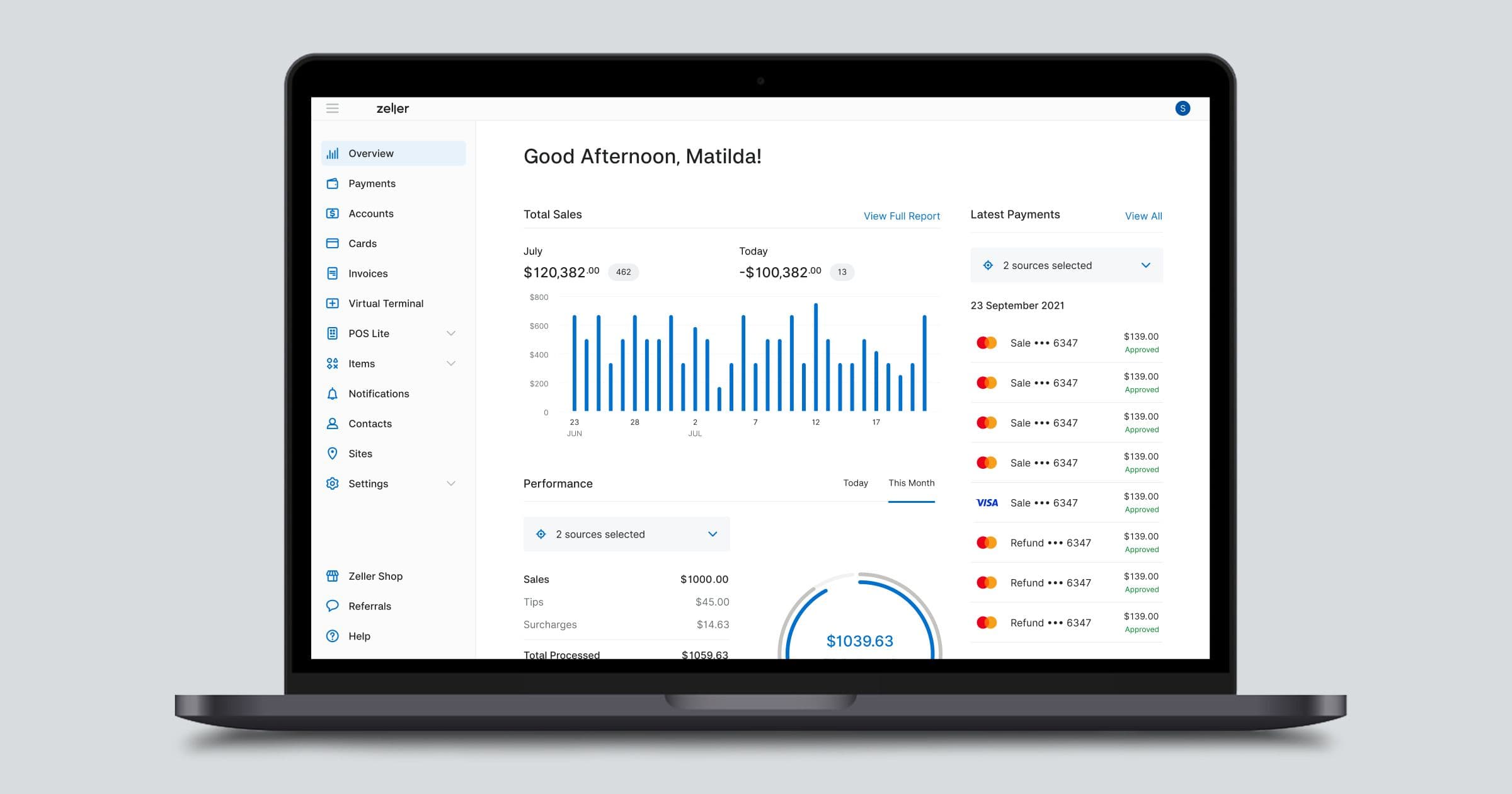
That’s where Zeller Dashboard comes in. By uniting your business’s financial activity in one online dashboard, it gives you detailed insights and real-time visibility that your traditional bank can’t match. From tracking sales and invoice payments to managing expenses and accruing interest, read on to discover three ways you can harness Zeller Dashboard to take control of your business cash flow.

What is Zeller Dashboard?

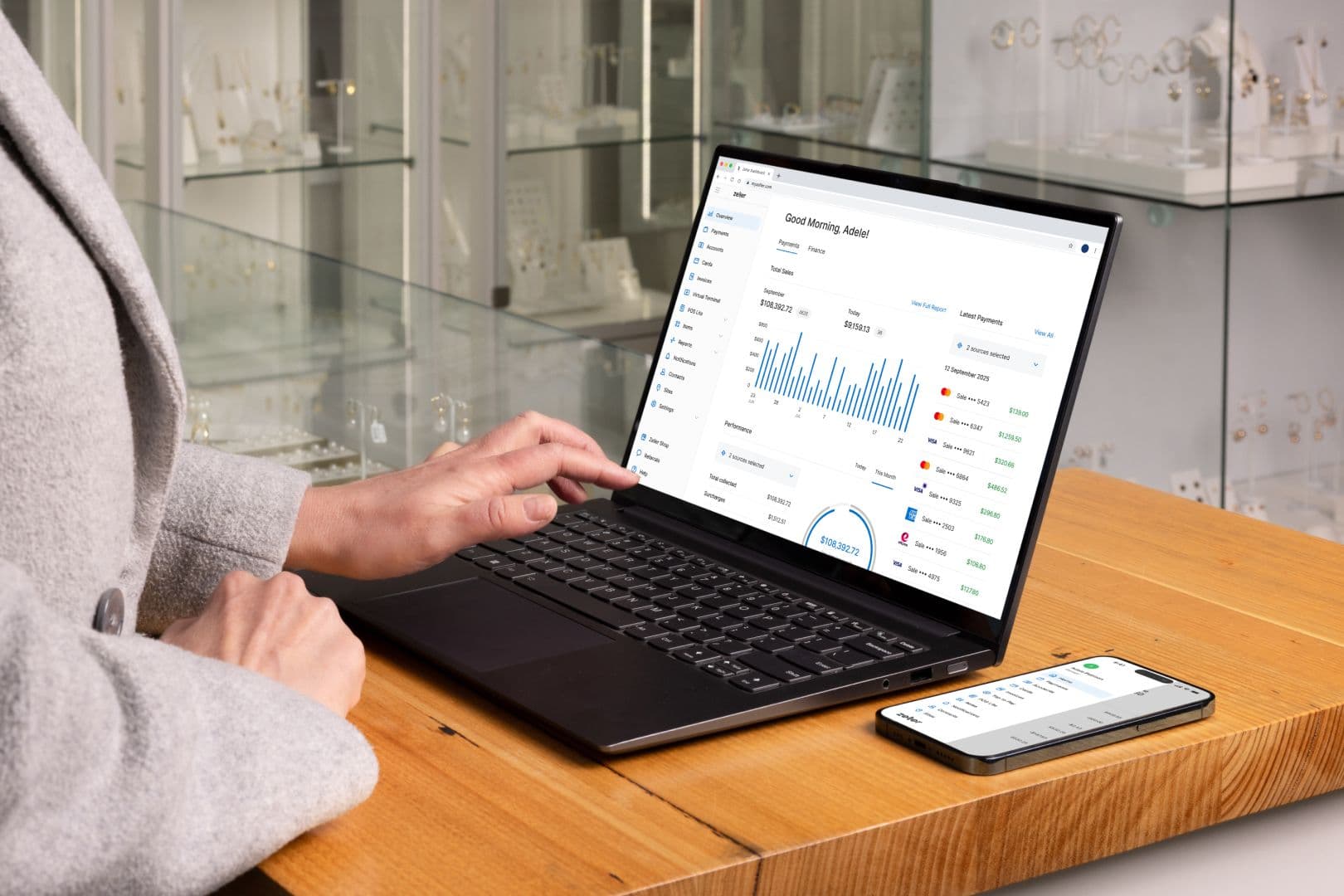
Zeller is an all-in-one financial platform that helps businesses accept payments, manage their money, and pay expenses – all from one place. At the heart of it is Zeller Dashboard: a central hub for tracking your financial position in real-time, and enabling you to use that data and insight to improve business cash flow. It transforms your financial information into clear, actionable reports and insights that help you make smarter, more informed decisions. Every way that cash flows in and out of your business is tracked on Zeller Dashboard. Read on to learn how.

1. Cash flow in: card payments, invoices, and POS

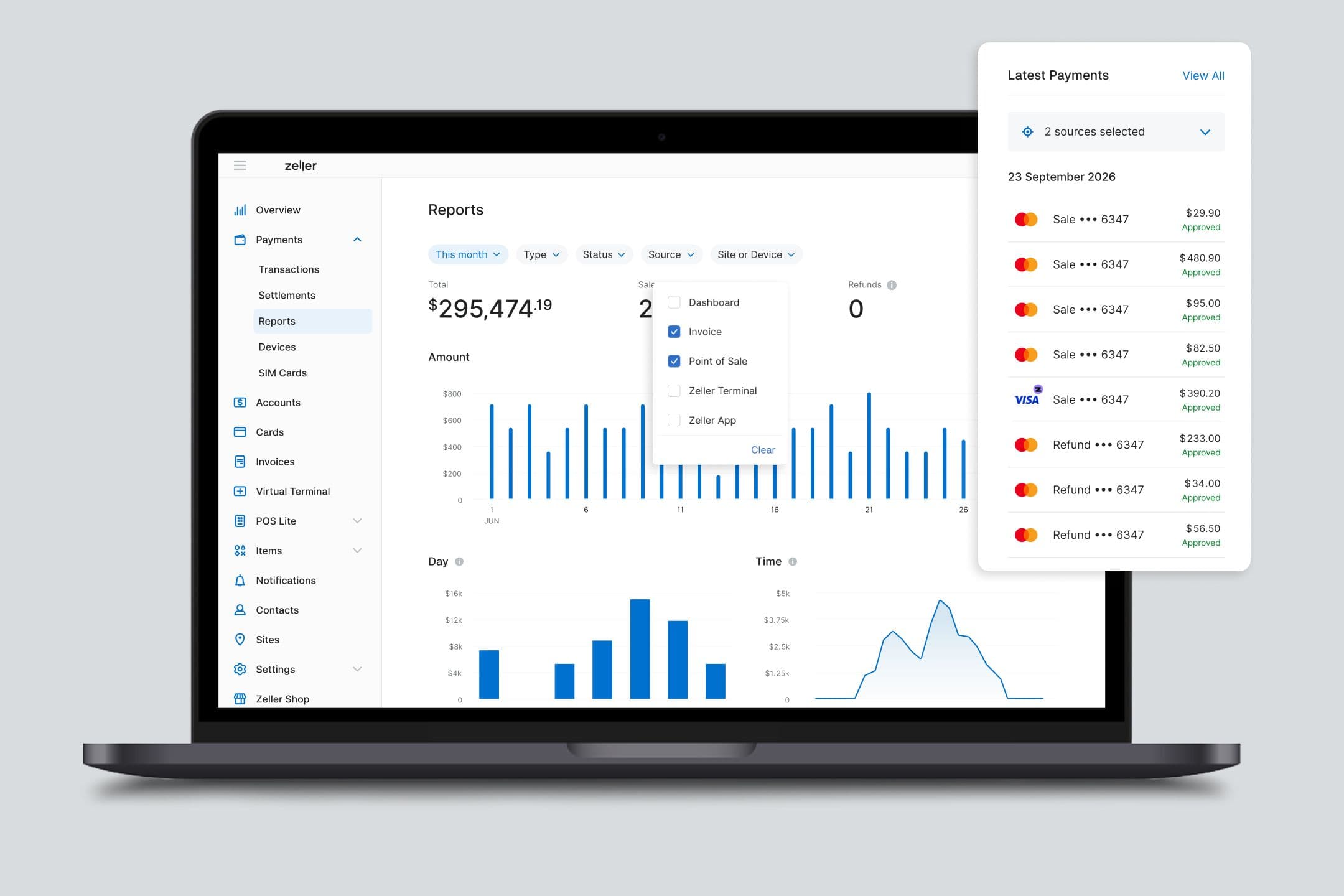
See all your incoming sales in one place – no matter how your customers pay. In Zeller Dashboard, your latest transactions are automatically compiled into a single report under the Payments tab (and in the Latest Payments preview on the Overview page). This report brings together payments from five different sources: Terminal, Point of Sale, Invoice, Dashboard, and Zeller App. Below, we’ve outlined each source and explained how to uncover specific insights for each within Zeller Dashboard.
1. Terminal

Terminal refers to any payment accepted through Zeller Terminal. If your business uses multiple terminals, you can rename each device for easy identification and more detailed tracking. For example, to find a specific transaction processed at your ‘Front Bar – St Kilda’ device, simply filter transactions by that terminal name. You can also assign terminals to specific sites, allowing you to view all payments from a particular location by filtering by Site. To filter transactions, go to Payments > Transactions, then click on the magnifying glass icon in the top right hand corner.

2. Point of Sale

Point of Sale refers to any payment processed through your POS system – whether it’s Zeller POS Lite or another POS integrated with Zeller Terminal. If you’re using Zeller POS Lite, you can view detailed insights into your sales within Zeller Dashboard by navigating to the POS Lite tab. Here, you’ll find visual reports showing your Top Items by Revenue and Top Items by Quantity Sold.

For deeper analysis, you can export a detailed sales breakdown – including the number of units sold, prices, SKUs, and categories – to create customised reports. You can also filter by specific dates and times, such as reviewing how many of one item you sold during the Christmas period last year compared to the year before, helping you forecast stock and ingredient orders more accurately.

3. Invoice

Invoice refers to any Zeller Invoice paid by card (invoices paid via bank transfer appear in the Finance tab – see below). In the Invoices tab, you can view all your invoices – paid, unpaid, or drafted – and filter them to find exactly what you need. You can also create new invoices directly from this tab, making it easy to manage your billing in one place.

To see a rolled-up or month-by-month summary of all your invoice payments, head to the Overview page and filter by Invoices. This gives you a clear snapshot of your invoicing performance and cash flow at a glance.

4. Dashboard 

Dashboard payments refer to any payment received via Zeller Virtual Terminal. This feature lets you send a secure payment link directly from Zeller Dashboard via email, SMS, or any platform you choose. Your customers can then pay privately using their card details, from anywhere, at their convenience. You can find more detailed reporting about these payments under Transactions within the Payments tab.

5. Zeller App 

Zeller App Payments refer to any sales made using Tap to Pay on Zeller App, an EFTPOS solution that works on Apple and Android smartphones. Like Zeller Terminal, you can name your devices for easy tracking – for example, ‘Helen’s iPhone XR’ – and assign them to specific sites, then filter transactions by device or site on the Transactions page.


Sales from the above channels are settled nightly, 365 days a year. Once settled into your Zeller Transaction Account, your balance is updated automatically on the Accounts page, as well as in the Finance tab on the Overview page. From here, your funds are ready to be used. 
2. Cash flow out: debit cards and expense management

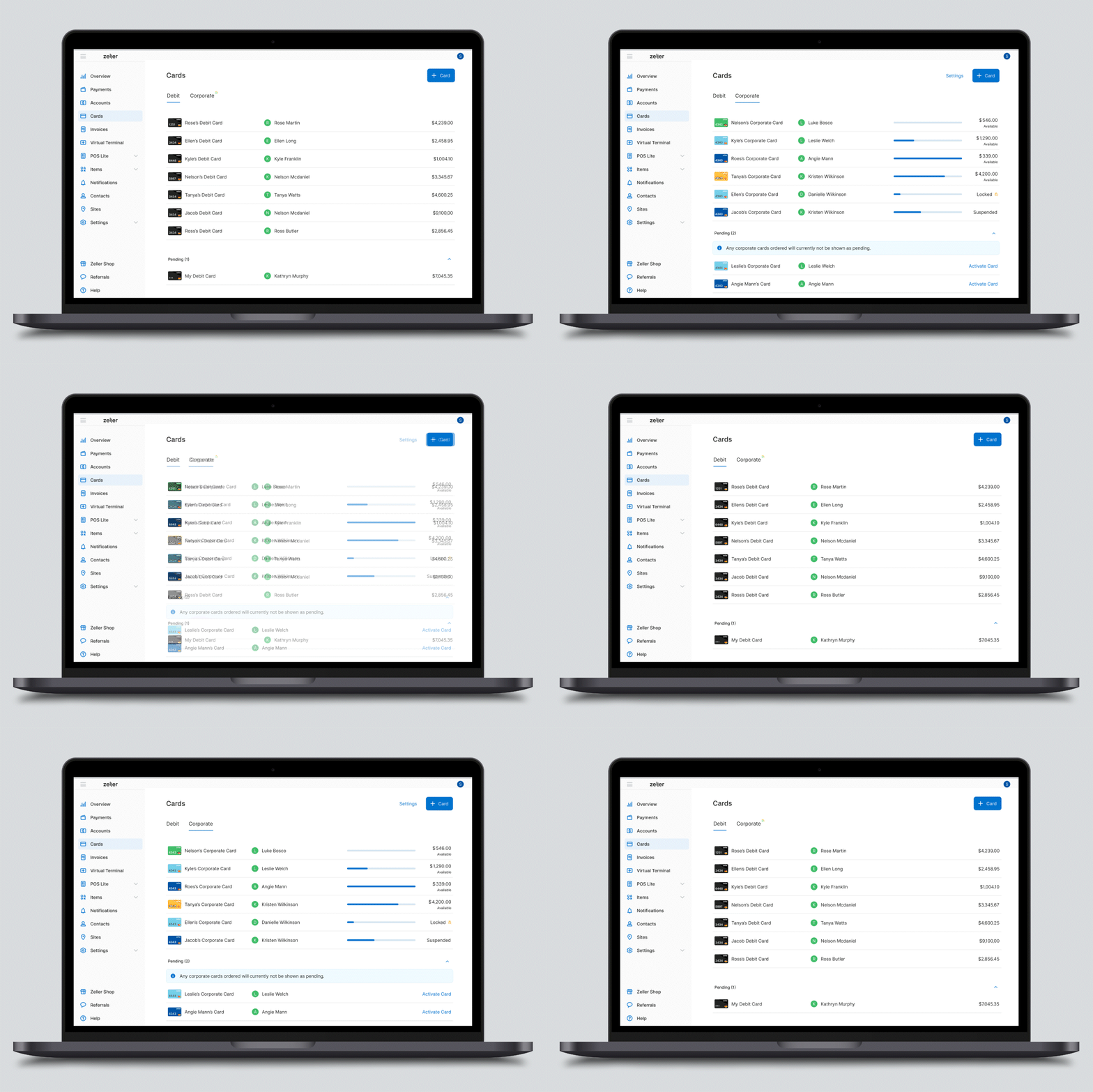
Once your funds have settled, they’re ready to pay for your business expenses. For even greater clarity on where your money is going, Zeller Dashboard lets you create unlimited accounts and cards, giving you detailed insights into your outgoing cash flow.

A smart cash flow management strategy is to set up multiple Zeller Transaction Accounts for different purposes – for example, marketing, direct costs, GST/PAYG/Super, operations, payroll, rent, or subscriptions and software. You can then link individual Zeller Debit or Corporate Cards to each account. Corporate cards are especially useful for managing team or project expenses, allowing you to set individual budgets, reset periods, and maximum transaction limits per card.

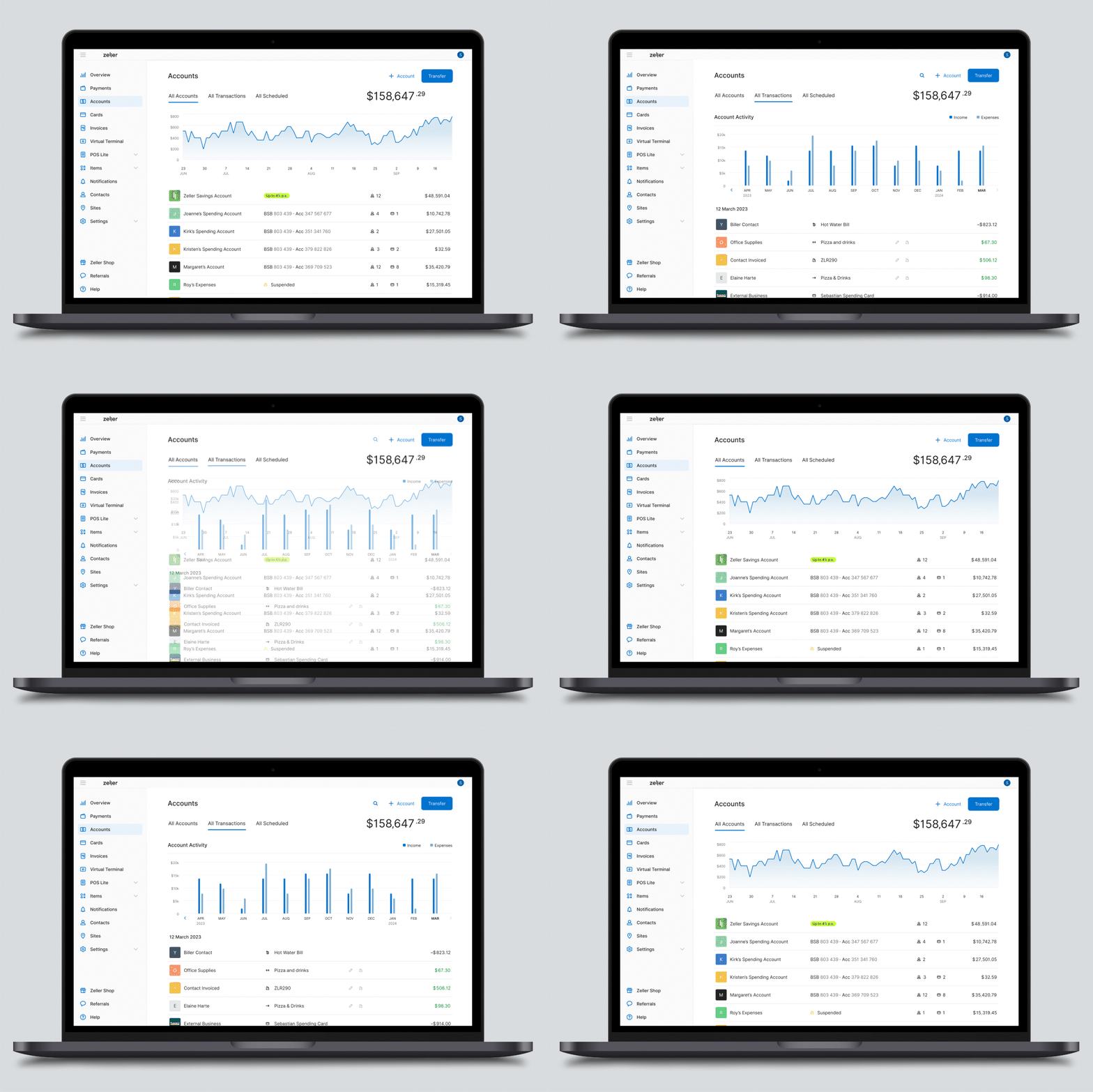
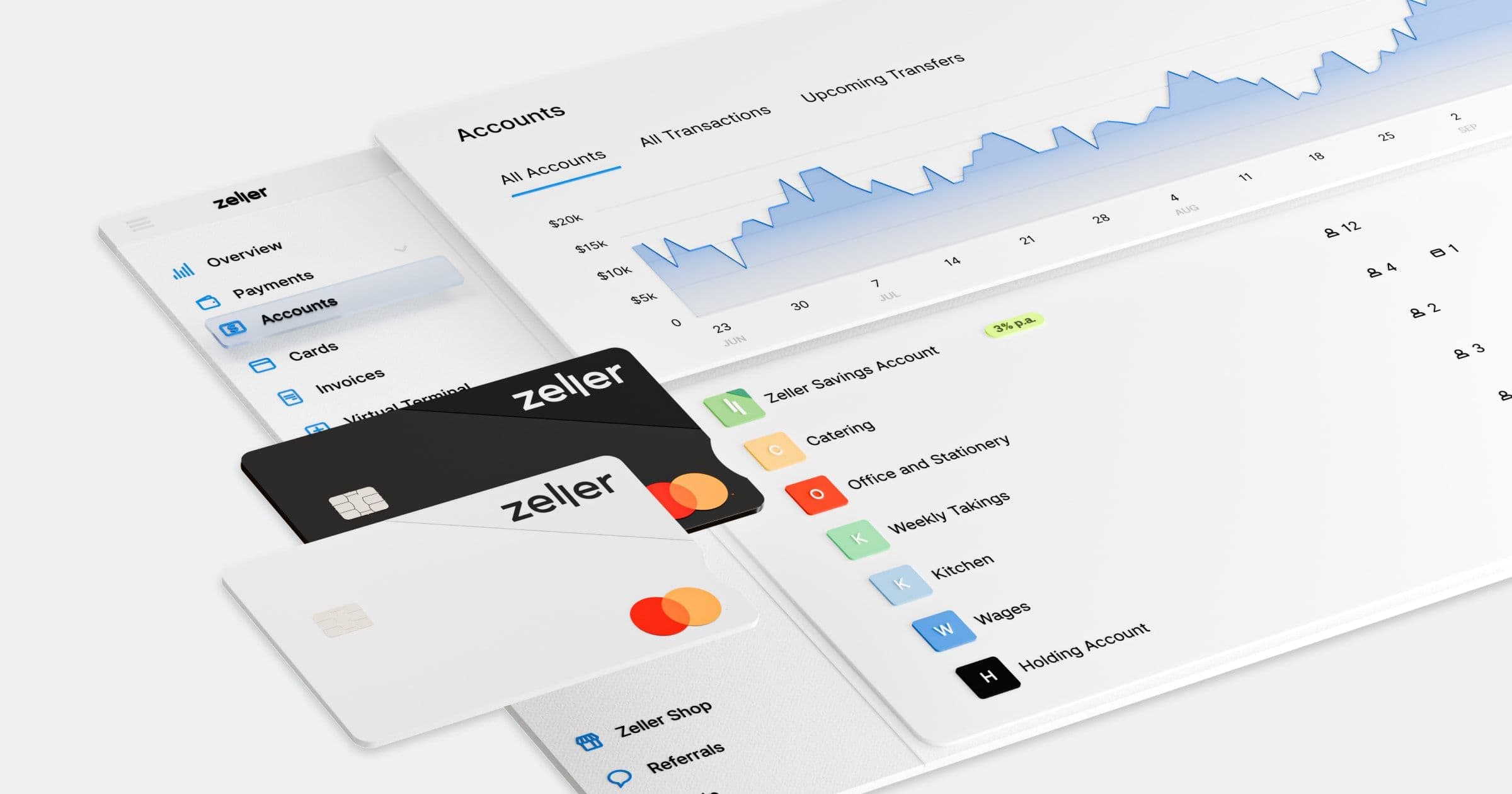
In the Accounts tab, you can view your total available balance at a glance and track all transactions, including settlements, transfers in and out, and card spending.
3. Cash accrued: growing your business savings and cash flow management strategies

By regularly monitoring the Payments and Finance tabs in Zeller Dashboard, you’ll gain a clear picture of your business’s cash inflows and outflows over time. What you do with these insights is what will make the biggest difference in improving your cash flow. Here’s how you can harness Zeller Dashboard to inform decisions that strengthen your finances:

Daily: Review transactions in real time

Whether you’re on your laptop or checking via the Zeller App, make a habit of reviewing sales and expenses throughout the day. Watch for anything that seems out of place – unusually low transaction values or unexpectedly high expenses. You know your business, so spotting outliers is often quick and easy.

I use Zeller Dashboard a lot. It’s a great back-of-house tool and very easy to use. It surfaces information you probably wouldn’t have searched for, but once you see it, you might want to follow up.”

Adele Arkell

Radio Mexico


Once a week: Review the previous week’s sales

At the start or end of each week, compare last week’s sales in Zeller Dashboard against your goals or past results. If you’ve fallen short, act early: increase sales, cut non-essential spending, or both. This could mean ramping up marketing efforts or pausing discretionary expenses until cash flow improves.

“I'll wait until I see my cash flow for the week on Zeller App before deciding whether or not I should hold off on an order.”

Alandra Flatley

Hairdresser


Once a month: Identify trends

With a month of data, start spotting patterns – busiest days, peak trading hours, and product performance. Use these insights to optimise staffing, opening hours, and stock levels, ensuring you’re resourced where and when demand is highest. Comparing month-to-month or year-on-year data can reveal seasonal trends. For example, October is the time to prepare for the busy summer season: reviewing last year’s sales can help you know when to hire Christmas casuals or order extra stock.

"Zeller Dashboard is really handy for showing when transactions are happening. If they vary at certain times of day, it shows we need fewer or more people, so we use it to help with rostering.”

Malcolm McCullough

Bill's Farm


Ongoing: Build a cash reserve

Once you know roughly how much surplus cash you generate each week – profits not needed for immediate spending – consider scheduling automatic transfers to Zeller Savings Account, where these funds can earn up to 4% p.a. interest. A cash reserve is essential for covering late payments, rising overheads, overstocked inventory, or seasonal fluctuations. It also provides a safety net for unforeseen expenses, like equipment breakdowns, legal costs, sudden operational increases, or economic downturns.
"We use the Zeller Savings Account because it gives a much higher interest rate than the big four. Plus, there are no fees or hoops to jump through. If the money’s in the account, it’s earning interest. Simple.”

Jake Nolan

Woolcott St. Tailors


Ready to get started with Zeller Dashboard?

Take payments, manage expenses, save and organise your funds, all from one simple online dashboard. Just like a business bank, but better.

Learn more

Best Business Bank Accounts in Australia for 2025

For Australian businesses, choosing the right business bank account isn’t as straightforward as it used to be. Between traditional banks, online-only challengers, and modern fintech alternatives like Zeller, the options are broader than ever – and more confusing. This guide compares some of the top options in Australia, from the Big Four to rising digital banking platforms, so you can choose the right account for your needs, whether you're a sole trader, freelancer, small business or scaling company. Compare top Australian business accounts to see why Zeller Transaction Account stands out. As you can see from the table above, Zeller either matches or beats the big-4 banks in almost every area. Traditional banks like CommBank, NAB, Westpac and ANZ each offer business accounts with in-branch service, cash handling and international payment features. While these can suit businesses that still rely on physical banking, they often come with higher monthly fees and less flexible digital tools. The two limitations to a Zeller Business Transaction Account are depositing cash and multi-currency accounts. Zeller merchants typically overcome this by: – keeping a separate bank account with a traditional bank for the sole purpose of depositing cash, then sending the money directly to their Zeller Business Transaction Account – keeping international currencies with another provider (like Wise or Airwallex).   Note: Zeller is working towards offering multi-currency accounts, so watch this space! Understanding business bank accounts: what they are and why they're essential. A business bank account isn’t just a nice-to-have, it’s a key part of running a compliant, professional and scalable operation. Here’s why you need one: Legal and tax compliance : If you're registered for GST or operate as a company, you’ll need a dedicated account for your business transactions. Simplified admin : Separating personal and business finances makes reconciling income, preparing for BAS, and managing deductions far easier. Professionalism : Customers take you more seriously, and are more likely to trust your business, when invoices and payments come from a business bank account. Cash flow control : Monitor your business incomings and outgoings more clearly to make faster decisions. Access to finance : It’s typically a requirement for business loans, overdrafts, business credit cards, and trade accounts. Types of business bank accounts in Australia. In Australia, there are a few core types of business accounts on offer, such as: Transaction accounts : Your day-to-day account for receiving payments, making purchases, paying suppliers. Savings accounts : For earning interest on unused business funds. Term deposits : Lock away funds for a set time to earn higher interest. Offset accounts : Linked to a business loan, helping reduce interest payments. Key factors to consider when choosing a business bank account. Fees Monthly fees, overdraft fees, dishonour fees, and FX costs can vary widely amongst business banks. For example: – Traditional banks may charge $10-$25/month just to keep the account open – Overdraft fees can be surprisingly high and feel unnecessarily punitive – International payments might include conversion fees or transfer costs – Staff-assisted transactions and even electronic transactions can also incur more fees This last point is worth illustrating with two examples: 1. CommBank charges $5 per staff-assisted transaction on business accounts 2.  Bendigo Bank charges $0.40 per electronic transaction on their Business Basic Account In contrast, Zeller Business Transaction Account has no fees whatsoever . For small businesses, especially those just starting out, these savings can quickly add up. Access and convenience In business, time is money. You’ll want an account that’s easy to use and built for purpose. Consider things like: – Does the online banking interface have a clean, modern design? – Does it have powerful transaction filtering and searching? – Is the mobile app easy to use on the go? ( Zeller App is rated 4.2 on the App Store) – Can you access help when you need it? (Zeller offers 24/7 online access and support) More businesses are moving away from needing face-to-face banking and instead placing higher value on mobile-first platforms that work wherever they are. Account features Choosing a business account isn’t just about the basics. The right features can save you time, reduce admin, and give you more control over how your business operates. For example, a Zeller Business Transaction Account offers you: Cards: Zeller lets you issue unlimited free physical and virtual debit cards with custom spending limits. You can also generate single-use virtual cards for added security when shopping online. Multi-user access: Give team members custom access, so they can view balances, send invoices or manage cards, without full account control. Integrations: You can easily connect your Zeller Business Transaction Account to tools like Xero for easy bookkeeping. Reporting: Built-in analytics, spending breakdowns, and receipt capture with Zeller. Access to interest: A Zeller Savings Account allows you to earn significantly more interest than with a traditional big-4 bank. Transaction categorisation: Automatically sort and label incoming and outgoing payments, helping you track spending by type, supplier or category. Multiple accounts: Spin up extra accounts for different projects, teams or business locations – no paperwork or branch visit required. Real-time fund transfers: Move money instantly via Australia's New Payment Platform (NPP). BPAY: Quickly and easily pay suppliers directly from your dashboard using BPAY. Security and regulation Traditional banks are Authorised Deposit-taking Institutions (ADIs), so deposits are protected by the Financial Claims Scheme (FCS), a government guarantee of up to $250,000 if the bank was to fail. With Zeller, customer funds are held in a segregated account at a fully-regulated, authorised Australian bank. Zeller also maintains strict compliance protocols, and uses advanced encryption, fraud monitoring and multi-factor authentication to keep your business finances secure. For many modern businesses, the benefits of speed, flexibility and innovation make this a smart, secure, and trusted alternative to traditional banking. Customer support Zeller offers 24/7 customer support via phone, email and SMS – so whether you need help setting up your account, have a question about a transaction, or are sorting something urgent during tax time, you can speak to someone when it matters most. Unlike many traditional providers, support isn't limited to business hours or ticket-based systems, you’ll speak to a real human with experience in supporting Aussie businesses. Suitability for your business type Every business is different. The right account for your business should suit your operating model, whether you're client-facing, retail-based, or remote. For example: Sole traders/freelancers often prioritise ease of use and low fees Growing businesses typically look for multi-user access, cards, and integrations Retailers/tradies frequently find POS and EFTPOS integration can make a huge difference International traders need strong FX capabilities and multi-currency accounts. Real-world examples: who should choose what? Not every business needs the same thing from their transaction account. Here are a few common scenarios to help you match features to your business type. Tradie on the road Zeller’s mobile-first setup, SMS invoicing and no-branch model means you can quote, invoice and track payments without ever setting foot in a bank. Freelancer with local clients Zeller gives you all the essentials with no monthly cost, plus faster access to funds to keep your cash flow healthy. Import/export business Wise and Airwallex make more sense here, with multi-currency accounts and competitive FX. Zeller does not currently offer multi-currency accounts yet, but has plans to do so in the future. Brick and mortar retailer Zeller integrates with EFTPOS and provides detailed sales tracking across channels. How to open a business account in Australia. Opening a business account in Australia is fairly straightforward, but exact requirements can vary slightly between providers. Here’s what to expect. In most cases, you’ll need: – A business name – An ABN or ACN – An industry type – Personal ID (driver licence or passport) – Business contact details – In some cases, business structure documentation (e.g. partnership agreement) With Zeller, the process is 100% online and takes just a few minutes. No paperwork. No queues. Just fast onboarding and instant access to your transaction account and cards. Managing your business account effectively. Once you’ve opened your account, here are a few tips to help you get the most out of it: Separate personal and business spending so your bookkeeping is cleaner and reconciling transactions is easier come tax time. Use categories and tags to track expenses by type – this helps you understand where your money’s going and identify areas to reduce spend. Review reports monthly to spot trends, catch anomalies, and stay on top of cash flow. Set up automatic payments to ensure bills, wages and subscriptions are always paid on time. Stay on top of GST and BAS by regularly exporting your records, so you’re never scrambling at lodgement time. Zeller makes all this easy, with built-in notes, digital receipts, auto-categorisation and integrations that connect your financial activity directly to your accounting software. So, which account is right for your business? The best business account depends on your priorities, but if you're an Australian business looking for a modern, mobile-first, all-in-one platform that’s free to use, integrates with your tools, and helps you manage everything from invoicing to spending, Zeller offers a strong alternative to the big-4 Australian banks. A Zeller Business Transaction Account is fast to set up, simple to use, and purpose-built for how Aussie businesses operate.

How Zeller Gives You More Than a Traditional Business Bank Account

For well over 100 years, Australian businesses had no option but to do things the ‘bank way’ – slow, complicated, 9 to 5, siloed, restrictive and riddled with fees. Fast forward to 2024, and despite incredible advancements in technology, the banks’ business offerings haven’t changed all that much. They’re still slow, overly complicated, 9 to 5 (at best), siloed, restrictive and riddled with fees. That’s why we’ve built the Zeller Transaction Account – the smarter, faster, fee-free way to manage all of your business finances, directly from your smartphone or computer. Who is a Zeller Transaction Account for? Whether you’re a sole-trader or a large, multi-location business, a Zeller Transaction Account has all the features you could ask for to manage your business finances. Issue unlimited physical and virtual business debit cards instantly, enjoy real-time transaction reporting, create multiple free transaction accounts for different projects or business locations, seamless Xero integration, zero fees, a better savings interest rate than with what’s on offer from the big 4, plus so much more. Why switch to Zeller Transaction Account? Let’s face it, running a business is tricky enough already without having to battle your bank’s outdated processes. With a Zeller Transaction Account, you get: Easy setup · Open your Zeller Account in minutes (no branch visits, no paperwork). Organise your money · Open unlimited transaction accounts and attach multiple virtual or physical cards to each of them. Free, unlimited debit cards · Access your funds anytime with no extra cardholder fees. Grow your savings faster · Enjoy a better interest rate than you’d get with a big-4 bank with our high interest business savings account. Zero fees ·  No account maintenance fees or monthly fees. No minimum balance requirements ·  Deposit as much or as little as you like. Integrate with Xero · Automatically reconcile your settlements and transactions. Control your finances on the go ·  Keep tabs on your finances with the Zeller App. Understand your spending · Attach contacts to each transaction, build your customer and supplier list and see who you’re spending with regularly. Track your expenses ·  Set spending budgets for team members, pay bills fast with BPAY, attach receipts and add notes for fast reconciliation. Fast access to your money · Nightly settlements so your cash keeps flowing. Dedicated mobile app · Easily manage your finances on the go. 7-day support · Get help when you need it from our friendly team. We urgently needed a business bank account, but Commbank made the process so difficult. With Zeller, everything was incredibly easy — we had our account and EFTPOS machine set up right away. Monica Bugno, The Last Supper, Darwin Ready to make the switch? Opening a free Zeller Transaction Account takes less time than grabbing a coffee. Say goodbye to hidden fees, low interest rates, and restrictive branch opening hours. Say hello to a seamless, secure, feature-rich experience designed for modern businesses. It’s time to get more with a Zeller Transaction Account.

5 Reasons a Savings Account Might Be Good for Your Business

Zeller already helped you grow your business, now we’re helping you grow your account balance. Whether you’re an established business owner or are just about to launch your new venture, there’s never a bad time to reassess how your business finances are organised. By now you will most likely have  opened a business transaction account but have you considered a business savings account? With a better interest rate than the big-4 banks, a Zeller Savings Account can help you grow your business savings faster. You'll earn up to an amazing 4% p.a. interest rate with a Zeller Savings Account . Whether you’re looking to upgrade your coffee machine, give your shop a new fit out, or purchase a new delivery vehicle, a savings account will help get you there. Read on to discover five ways a business savings account can help bolster your business. 1. It can serve as an emergency fund If COVID-19 taught us anything, it’s that you never know what’s around the corner. If you want your business to be able to better survive unexpected events, it’s very important that your business has a cash reserve. By adding funds regularly to a savings account that earns interest, you are building a buffer that your business can use through unforeseen expenses, such as an important piece of equipment breaking down, a legal battle, a sudden increase in operational costs or an economic downturn, for example. 2. It can help manage poor cash flow According to The Invoice Market’s research , cash flow is the number one issue affecting small to medium businesses across Australia, with more than a third of them having to dip into their own personal savings to keep their business afloat. By moving funds into a savings account, you can contribute to building your businesses' resilience. Late payments, rising overheads, overstocked inventory or seasonal fluctuations are all common causes of poor cash flow; having some extra funds to see you through these leaner times will help give your business more stability. 3. It can help you avoid tax stress As a business owner, it is your responsibility to manage your tax obligations. If you do not have an organised approach to earmarking tax funds and declaring your turnover, you may end up with an unforecasted tax bill that could cripple your business. One great way of managing funds for not yet paid tax obligations is to put them into an interest-earning account before you need to pay the tax office. Not only will you have set aside cash to meet your tax obligations, but you will also have earned interest on it. 4. It can improve your position to borrow Even if you’re not currently planning on taking out a business loan, it might be something you choose to do in the future – so it’s important to consider your credit rating. When a lender is assessing whether or not to lend you money, they look at how much risk they are taking on. This ‘risk’ is what is known as your credit rating. In ascertaining your credit rating, they might assess your cash flow and your cash on hand. A savings account can therefore assist in providing this context to a lender. 5. It can help finance future investments Interest rates on savings accounts may not be very high, but they still offer a way to earn some passive income on idle funds. The extra cash that you earn from interest can be invested back into your business: whether you use it for purchasing new equipment, upgrading your technology, or helping to fund an advertising campaign, over time, these purchases can make a considerable difference to your business. While the day-to-day running of your business can be all consuming, making a contribution each week to a savings account can set you up for future expansion by earning you money in the background. How does a Zeller Savings Account compare to the big-4 banks? *Interest rates current at 1 December 2025. Terms apply . Don’t let your business savings stagnate in a big-4 bank account. With Zeller’s competitive interest business savings account , not only will you earn a better return on your savings without a minimum balance requirement, but you will also benefit from a whole ecosystem of financial services and business products. From securely holding your money to accepting payments, managing expenses and tracking your cash flow, Zeller’s suite of financial tools lets you tailor your solution to your business needs. With everything consolidated into one reliable platform, you can accept, settle, spend, and track your funds faster, leaving you more time to run your business. Disclaimer: The information provided on this site is for general informational purposes only and should not be considered as advice that takes into account your business needs and objectives. If you are unsure, seek the advice of a qualified accountant or financial service advisor before deciding whether a savings account is right for your business.